
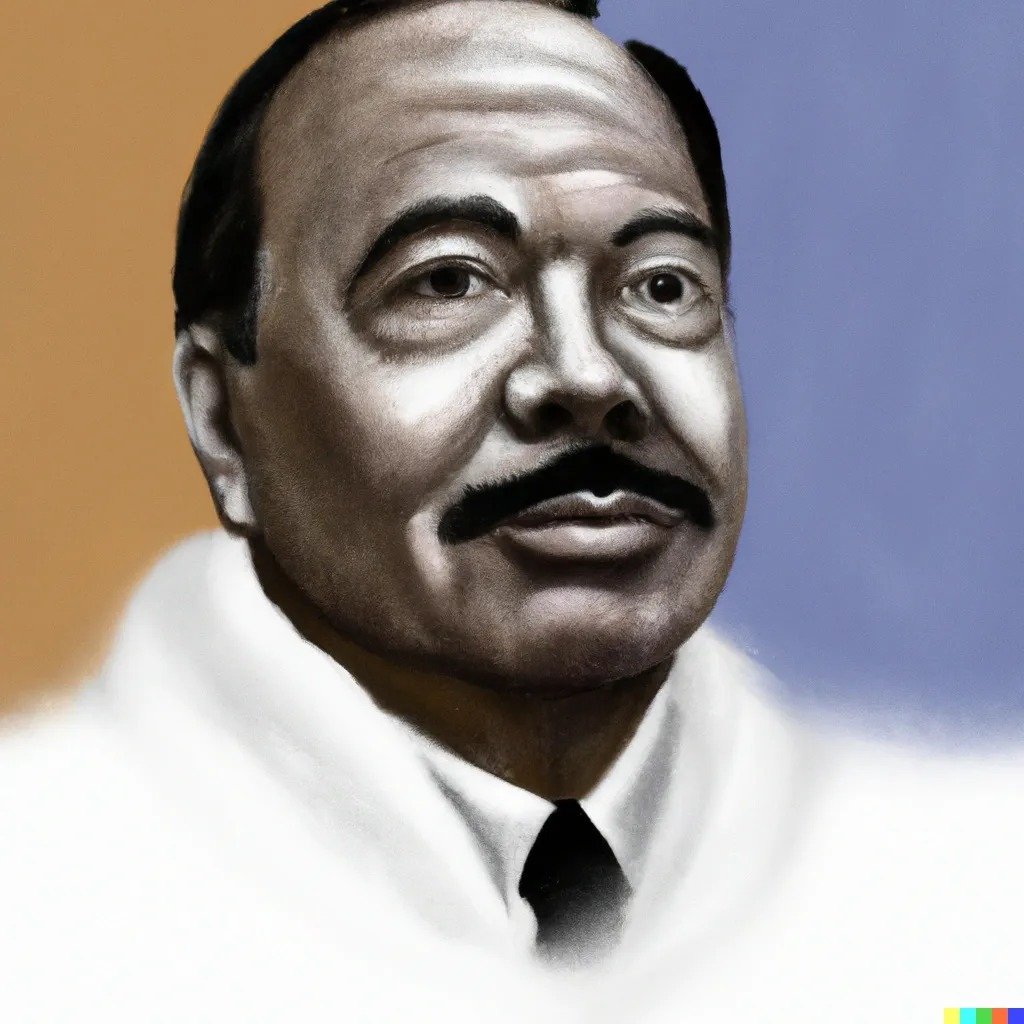
Black history is an essential aspect of American history and encompasses the contributions and experiences of African Americans throughout the centuries. From abolitionists and civil rights activists to writers and artists, there are countless individuals who have made important contributions to society and left a lasting impact on the world.
In this overview, we will highlight some of the most notable figures in Black history, including Harriet Tubman, Martin Luther King Jr, Malala Yousafzai, Nelson Mandela, Frederick Douglass and Maya Angelou and other notable figures. These individuals have made significant contributions in various fields and their impact on the world is still felt today.
- Martin Luther King Jr. was a Baptist minister and activist who became the most visible spokesperson and leader in the civil rights movement from 1954 until his assassination in 1968.
- Malcolm X was an African American Muslim minister and human rights activist. To his admirers, he was a courageous advocate for the rights of blacks, a man who indicted white America in the harshest terms for its crimes against black Americans; detractors called him a racist and a hatemonger.
- Harriet Tubman was an abolitionist, humanitarian, and an armed scout and spy for the Union Army during the American Civil War. Born into slavery, Tubman escaped and subsequently made some 13 missions to rescue approximately 70 enslaved people, including family and friends, using the network of antislavery activists and safe houses known as the Underground Railroad.
- Frederick Douglass was an American social reformer, abolitionist, orator, writer, and statesman. After escaping from slavery in Maryland, he became a national leader of the abolitionist movement in Massachusetts and New York, gaining note for his dazzling oratory and incisive antislavery writings.
- Maya Angelou was an American author, poet, and civil rights activist. She published seven autobiographies, three books of essays, several books of poetry, and was credited with a list of plays, movies, and television shows spanning over 50 years. She received dozens of awards and more than 50 honorary degrees.
- Rosa Parks was an American activist in the civil rights movement best known for her pivotal role in the Montgomery bus boycott. The United States Congress has called her "the first lady of civil rights" and "the mother of the freedom movement".
- Nelson Mandela was a South African anti-apartheid revolutionary, political leader, and philanthropist who served as President of South Africa from 1994 to 1999. He was the country's first black head of state and the first elected in a fully representative democratic election.
- W.E.B. Du Bois was an American sociologist, historian, civil rights activist, Pan-Africanist, author, and editor. He was the first African American to earn a Ph.D. from Harvard University.
- Oprah Winfrey is an American media executive, actress, talk show host, television producer, and philanthropist. She is best known for her talk show, The Oprah Winfrey Show, which was the highest-rated program of its kind in history and ran in national syndication for 25 years from 1986 to 2011.
- Ida B. Wells was an African American investigative journalist, educator, and an early leader in the Civil Rights Movement. She documented lynching in the United States, showing that it was often used as a way to control or punish black people who competed with white people.
- James Baldwin was an American novelist, playwright, and activist. His essays, as collected in Notes of a Native Son (1955), explore palpable yet unspoken intricacies of racial, sexual, and class distinctions in Western societies, most notably in mid-20th-century America, and their inevitable if unnamed tensions.
- Shirley Chisholm was an American politician, educator, and author. In 1968, she became the first African American woman elected to the United States Congress, representing New York's 12th congressional district for seven terms from 1969 to 1983. In 1972, she became the first African American to run for a major party's nomination for President of the United States.
- Thurgood Marshall was an American lawyer, serving as Associate Justice of the Supreme Court of the United States from 1967 until 1991. Marshall was the Court's 96th justice and its first African-American justice. Before becoming a judge, he was a lawyer who was best known for his high success rate in arguing before the Supreme Court and for the victory in Brown v. Board of Education, a 1954 case in which the Court declared state laws establishing racial segregation in public schools to be unconstitutional.
- Booker T. Washington was an American educator, author, orator, and advisor to multiple presidents of the United States. Between 1890 and 1915, Washington was the dominant leader in the African American community. Washington was from the last generation of black American leaders born into slavery and became the leading voice of the former slaves and their descendants.
- Duke Ellington was an American composer, pianist, and leader of a jazz orchestra, which he led from 1923 until his death over a 50-year career. Ellington's music stretched into various other genres, including blues, gospel, film scores, popular, and classical.
- Louis Armstrong was an American trumpeter, composer, vocalist, and actor who was one of the most influential figures in jazz. His career spanned five decades, from the 1920s to the 1960s, and different eras in the history of jazz.
- Ella Fitzgerald was an American jazz singer sometimes referred to as the First Lady of Song, Queen of Jazz, and Lady Ella. She was noted for her purity of tone, impeccable diction, phrasing, intonation, and a "horn-like" improvisational ability, particularly in her scat singing.
- Billie Holiday was an American jazz singer with a career spanning nearly thirty years. Nicknamed "Lady Day" by her friend and music partner Lester Young, Holiday had a seminal influence on jazz music and pop singing. Her vocal style, strongly inspired by jazz instrumentalists, pioneered a new way of manipulating phrasing and tempo.
- Bessie Smith was an American blues singer. Nicknamed the Empress of the Blues, she was the most popular female blues singer of the 1920s and 1930s. She is often regarded as one of the greatest singers of her era and was a major influence on other jazz singers.
- Dizzy Gillespie was an American jazz trumpeter, bandleader, composer, and singer. Gillespie was a trumpet virtuoso and improviser, building on the virtuoso style of Roy Eldridge but adding layers of harmonic complexity previously unknown in jazz. His combination of musicianship, showmanship, and wit made him a leading popularizer of the new music called bebop.
- Miles Davis was an American jazz trumpeter, bandleader, and composer. He is among the most influential and acclaimed figures in the history of jazz and 20th-century music. Davis adopted a variety of musical directions in a five-decade career that kept him at the forefront of many major stylistic developments in jazz.
- John Coltrane was an American jazz saxophonist and composer. Working in the bebop and hard bop idioms early in his career, Coltrane helped pioneer the use of modes in jazz and later was at the forefront of free jazz. He led at least fifty recording sessions during his career, and appeared as a sideman on many others.
- Nina Simone was an American singer, songwriter, pianist, arranger, and civil rights activist who worked in a broad range of musical styles including classical, jazz, blues, folk, R&B, gospel, and pop. The musicologist Robert Christgau called her "the High Priestess of Soul". Simone's music and lyrics often dealt with political and social issues of African American people, as well as the Civil Rights Movement.
- Langston Hughes was an American poet, social activist, novelist, playwright, and columnist from Joplin, Missouri. He was one of the earliest innovators of the then-new literary art form called jazz poetry. Hughes is best known as a leader of the Harlem Renaissance in New York City. He famously wrote about the period that "the negro was in vogue", which was later paraphrased as "when Harlem was in vogue".
- Toni Morrison was an American novelist, essayist, and professor. Her novels are known for their epic themes, vivid dialogue, and richly detailed African American characters; among the best known are her novels The Bluest Eye and Beloved, which won the Pulitzer Prize for Fiction in 1988. In 1993, Morrison became the first African-American woman to win the Nobel Prize in Literature.
- Barack Obama is an American attorney and politician who served as the 44th President of the United States from 2009 to 2017. He is the first African American to hold the office. Prior to his presidency, Obama served as a U.S. Senator from Illinois from 2005 to 2008. Obama's presidency was marked by major accomplishments in healthcare reform, environmental policy, and foreign relations. He also oversaw the withdrawal of troops from Iraq and the implementation of the Affordable Care Act, commonly known as Obamacare. In 2009, he was awarded the Nobel Peace Prize for his efforts to promote international cooperation and nuclear disarmament.
These are just a few examples of notable figures in Black history who have made significant contributions to society through their activism, leadership, and creativity. There are many more individuals who have played important roles in shaping the course of history, and it is important to learn about and acknowledge their contributions.